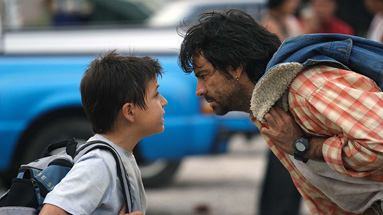
Test for Under The Same Moon
For
your test on the movie, you will be working with one other classmate to
write an in-class four paragraph essay (written). This will be
a test grade; here are your requirements:
1. You and your partner need to work together to write a four paragraph essay. It's up to you and your
partner to decide how you'll write this essay. You can take turns, dictate to each other, etc.
2. Choose one of the following questions to write an essay on:
A. Compare and Contrast the Theme of Home in the book to the movie.
B. Compare and Contrast the Theme of Feminism in the book to the movie.
C. Compare and Contrast the Theme of Family Bond in the book to the movie.
D. Compare and Contrast the Hispanic culture/women and men in the book to the movie.
3. Your essay will be graded on the same aspects as your other papers: grammar, formal tone,
analyzing vs summarizing, etc.
4. Follow this essay guideline for your four paragraphs:
I. Introduction
A. Generalization
B. Thesis
II. First Body Paragraph
A. What are the aspects that you are comparing between the book and movie that similar?
III. Second Body Paragraph
A. What are the aspects that you are contrasting between the book and movie that are different?
IV. Conclusion Paragraph
A. Summarize your thesis and two body paragraphs briefly
B. End with a lasting statement
Friday, December 7, 2012
Monday, December 3, 2012
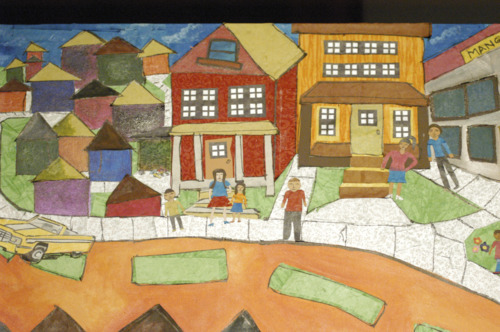
Vignettes of Your Life
Our book The House on Mango Street is written in the form of a collection of vignettes. It may seem like the chapters have no connection with each other, but every chapter gives us a look - a glimpse - into a certain part of Esperanza's life that is important and meaningful. It's the small things in our life that make the biggest difference. For the next few days in class, you each be making your own vignettes about YOUR life. Here are your requirements:
1. Write FIVE (or more) vignettes about your life. Try to write it like the author is writing The House
on Mango Street
2. Come up with a creative chapter title for each vignette.
3. Focus each vignette on ONE specific memory or aspect of your life.
4. Here are some areas to write about in any of your vignettes:
A. childhood memory about something
B. a certain family member and something about them that sticks out to you
C. description of your house or neighborhood
D. stories about how you met a friend, a time you were playing
E. scary memories or memories where you learned an important lesson
F. school or church
5. Make a cover for your book of short vignettes - come up with a creative title
Tuesday, November 27, 2012
Case Study Poster
For the next few days, you will be working on an individual case study on our book. It will be on a social issue in our book that is present in our world today. Here are your requirements:
1. Choose a character in the book
2. Focus on a social issue in the book that is present in our world today. Here are some to think about:
A. Growing up too fast (teen pregnancy, toddlers and tiaras, etc.)
B. Broken homes
C. Stereotypes/ Racial Stereotyping
D. Low-Income/ At-risk Children
E. Neglectful Parents
F. Sexual Predators
G. Home Abuse
3. Make a poster. It needs the following info on it:
A. What are some statistics of your issue? (authentic source)
B. What are some studies on your issue? (authentic source)
C. What is the connection to the book?
D. What are some solutions or answers to the issue? (authentic source)
E. Interview someone relevant to your study and put your interview on your poster. Make up your
own questions.
Monday, November 26, 2012
What is "Home"?
The term "home" can vary according to who you ask. One might see home as a simple place where they grew up, while another may seem home as something entirely different. There is really no one right definition of home. What does "home" mean to you?
Wednesday, November 14, 2012
Potential Paper Topics
Survival Instincts
Religion (cause and effects, personal identities, etc.)
Family Bond
War
Propaganda
Sacrifice
Religion (cause and effects, personal identities, etc.)
Family Bond
War
Propaganda
Sacrifice
Thursday, November 1, 2012
Propaganda
"Harrison Bergeron"
Here in the United States, we are founded on principles of equality - but what does it truly mean to be "equal"? Where does personal identity/individuality come in to play? For the next few days, we will be reading a short story about the dangers of propaganda and "complete equality." Here are your requirements:
1. Read "Harrison Bergeron"
2. Write a one page report answering the following questions:
A. What is the propaganda (the lie) in the short story?
B. How is the propaganda spread in the story?
C. How does it affect the characters?
D. Why is the propaganda so effective in the story?
3. Create your own piece of propaganda about an issue in our school. Pretend it will be seen and
spread throughout the campus. You can:
A. Write a letter or newspaper article of propaganda
B. Make a propaganda television ad with an iPad
C. Make a propaganda poster
Here in the United States, we are founded on principles of equality - but what does it truly mean to be "equal"? Where does personal identity/individuality come in to play? For the next few days, we will be reading a short story about the dangers of propaganda and "complete equality." Here are your requirements:
1. Read "Harrison Bergeron"
2. Write a one page report answering the following questions:
A. What is the propaganda (the lie) in the short story?
B. How is the propaganda spread in the story?
C. How does it affect the characters?
D. Why is the propaganda so effective in the story?
3. Create your own piece of propaganda about an issue in our school. Pretend it will be seen and
spread throughout the campus. You can:
A. Write a letter or newspaper article of propaganda
B. Make a propaganda television ad with an iPad
C. Make a propaganda poster
Wednesday, October 31, 2012
World Religion
There are many different religions in the world today - with different beliefs, traditions, and practices. Here in the US, religion plays a large factor as well. Regardless of your personal beliefs, what do you think is the purpose of religion?
Thursday, October 25, 2012
World behind The Year of Impossible Goodbyes
More Than Just a Story
For the next several days, we will be researching the world behind our novel The Year of Impossible Goodbyes. Your group's job will be to research, write, and present a lesson on your topic. Here are your requirements:
A) 1.5 page research report on your topic; MLA format; two authentic sources with
parenthetical citation
B) Three part lesson: Activator, Keynote Presentation, and Summarizing Activity
C) An essential question that will be the focus of your lesson and tie everything together
Here are the topics:
1. NORTH AND SOUTH KOREA
A. History between North and South Korea
B. Differences between North and South Korea
C. North and South Korea Today
2. WORLD RELIGIONS
For each religion: What is it? Its principles and practices? History of it? Practiced today still?
A. Shintoism
B. Confucianism
C. Buddhism
D. Catholicism
3. THE KOREAN WAR
A. Causes of the War
B. Describe the War
C. Some Effects/Outcomes of the War
D. Describe Three Famous Battles During the Korean War
4. KOREA UNDER JAPANESE RULE
A. Describe Life for Koreans under Japanese Rule
B. No Gun Ri Massacre
C. Describe Life of Korean Refugees in Korean War
D. Biography of Sook Nyul Choi (the author)
5. COMMUNISM
A. Describe and Define Communism
B. History of Communism: Who countries have tried it? How has it worked? Why was it
important to the Korean War?
C. The Origin of Communism/ Bio of Karl Marx
D. Describe Communism Today in Our World
For the next several days, we will be researching the world behind our novel The Year of Impossible Goodbyes. Your group's job will be to research, write, and present a lesson on your topic. Here are your requirements:
A) 1.5 page research report on your topic; MLA format; two authentic sources with
parenthetical citation
B) Three part lesson: Activator, Keynote Presentation, and Summarizing Activity
C) An essential question that will be the focus of your lesson and tie everything together
Here are the topics:
1. NORTH AND SOUTH KOREA
A. History between North and South Korea
B. Differences between North and South Korea
C. North and South Korea Today
2. WORLD RELIGIONS
For each religion: What is it? Its principles and practices? History of it? Practiced today still?
A. Shintoism
B. Confucianism
C. Buddhism
D. Catholicism
3. THE KOREAN WAR
A. Causes of the War
B. Describe the War
C. Some Effects/Outcomes of the War
D. Describe Three Famous Battles During the Korean War
4. KOREA UNDER JAPANESE RULE
A. Describe Life for Koreans under Japanese Rule
B. No Gun Ri Massacre
C. Describe Life of Korean Refugees in Korean War
D. Biography of Sook Nyul Choi (the author)
5. COMMUNISM
A. Describe and Define Communism
B. History of Communism: Who countries have tried it? How has it worked? Why was it
important to the Korean War?
C. The Origin of Communism/ Bio of Karl Marx
D. Describe Communism Today in Our World
Friday, October 19, 2012
Grammar Review!!!
Today, we want to review the grammar rules we have learned before we move on to new lessons. In your group, you will make the following for a certain grammar rule we've learned:
1. Keynote Presentation
A. Definition of the rule
B. Examples of the rule
2. Exercises for Your Group to Do
A. Come up with practices the group can do for your rule
B. Go over the answers with your group
I. Independent Clauses vs Dependent Clauses
II. Simple and Compound Sentences
III. Complex and Compound-Complex Sentences
IV. Four Ways to Fix a Run-on Sentence
(If you're a group of three, then II and III are combined)
Here are the groups:
A. Archie, Ashley, Miranda
B. Kayla D, Justin, Rahnilia
C. Deja, Kayla B., Taylor, Josh
D. Summer, Tori, Samala, Cameron
E. Tymara, Anthony, Erin
1. Keynote Presentation
A. Definition of the rule
B. Examples of the rule
2. Exercises for Your Group to Do
A. Come up with practices the group can do for your rule
B. Go over the answers with your group
I. Independent Clauses vs Dependent Clauses
II. Simple and Compound Sentences
III. Complex and Compound-Complex Sentences
IV. Four Ways to Fix a Run-on Sentence
(If you're a group of three, then II and III are combined)
Here are the groups:
A. Archie, Ashley, Miranda
B. Kayla D, Justin, Rahnilia
C. Deja, Kayla B., Taylor, Josh
D. Summer, Tori, Samala, Cameron
E. Tymara, Anthony, Erin
Wednesday, October 10, 2012
Potential Topics
Theme
Dehumanization
Relationship with Father
Personal Identity
Surviving
Characters
Elie Wiesel
Father
Dehumanization
Relationship with Father
Personal Identity
Surviving
Characters
Elie Wiesel
Father
The Death of the Soul
de·hu·man·ize - to deprive of human qualities or attributes; divest of individuality
What is it that makes us human? Makes us different than an animal? In other words, what qualities separates us and makes us more unique than any other creature on earth?
Friday, October 5, 2012
Assignment for Today, 10/5
First Task of Class:
Come up with a potential thesis for your next paper. It will be on Night, obviously. You should still have that handout with a list of verbs that you can use to make sure your thesis is an analyzing statement and not summary/moralizing.
Rest of Class Time:
Many of you are behind in your reading of Night. After you have come up with a potential thesis for the book, actually FINISH reading the book. You should have it all read by next Wednesday!
Come up with a potential thesis for your next paper. It will be on Night, obviously. You should still have that handout with a list of verbs that you can use to make sure your thesis is an analyzing statement and not summary/moralizing.
Rest of Class Time:
Many of you are behind in your reading of Night. After you have come up with a potential thesis for the book, actually FINISH reading the book. You should have it all read by next Wednesday!
Tuesday, October 2, 2012
Writing Your Own Memoir
Historical Fiction
For the next two days, your job will be to create your own fictional memoir of the Holocaust. You can write as a person who hid Jewish people or a Jewish person suffering during the Holocaust - there is some flexibility up to you. This will be counted as a test grade. Here are your requirements:
1. Fact Sheet
Because this is historical fiction, I want you to use real historical details about the Holocaust in your memoir. Your fact sheet should have at least FIVE HISTORICAL FACTS that you researched and put in your fictional memoir. Think of facts like actual concentration camps, how life was in those camps, what life was for men and for women (how they were treated differently) - you just did a project on this so it should be easy! Also list the online sources where you received your information from.
2. At Least Three Journal/Diary Entries
You need at least three entries in your memoir - treat it like a journal or diary. One entry should be describing your life BEFORE the Nazis took over. Your second entry should describe your life in a concentration camp. Your third entry should describe your life after concentration camp. Of course, you can do more than one entry for each part if you desire. I want at least 450 words (about one and a half pages double spaced) overall.
3. A Parent/Child Relationship
Just as a father-son relationship is the center of our reading so far, your memoir should reflect a parent/child relationship. The specifics of that relationship is up to you.
4. A Physical Memoir
You need to also create a physical book for your memoir. Make a front page cover for it and whatever else you want to do. Be creative!
For the next two days, your job will be to create your own fictional memoir of the Holocaust. You can write as a person who hid Jewish people or a Jewish person suffering during the Holocaust - there is some flexibility up to you. This will be counted as a test grade. Here are your requirements:
1. Fact Sheet
Because this is historical fiction, I want you to use real historical details about the Holocaust in your memoir. Your fact sheet should have at least FIVE HISTORICAL FACTS that you researched and put in your fictional memoir. Think of facts like actual concentration camps, how life was in those camps, what life was for men and for women (how they were treated differently) - you just did a project on this so it should be easy! Also list the online sources where you received your information from.
2. At Least Three Journal/Diary Entries
You need at least three entries in your memoir - treat it like a journal or diary. One entry should be describing your life BEFORE the Nazis took over. Your second entry should describe your life in a concentration camp. Your third entry should describe your life after concentration camp. Of course, you can do more than one entry for each part if you desire. I want at least 450 words (about one and a half pages double spaced) overall.
3. A Parent/Child Relationship
Just as a father-son relationship is the center of our reading so far, your memoir should reflect a parent/child relationship. The specifics of that relationship is up to you.
4. A Physical Memoir
You need to also create a physical book for your memoir. Make a front page cover for it and whatever else you want to do. Be creative!
Monday, October 1, 2012
Trial by Fire
Enduring Persecution
How do trials and persecution affect our personal identities? What effects do they have on our beliefs and convictions? If you are completely changed after a serious trial or persecution - you deny or reject your previous beliefs and convictions - does it mean you were never really true to it to begin with?
Friday, September 28, 2012
What It Means To Be a Jew Continued....
Jewish Tradition
What role does tradition play in a person's identity? How important is it to the person they are or become? Do you have any family traditions that are important to you?
The basic definition of tradition is: the handing down of statements, beliefs, legends, customs, information, etc. from generation to generation, especially by word of mouth or by practice.
Today, your task is to research some of the traditions of the Jewish people. We want to discover the importance of tradition to one's personal identity. Here are your requirements:
1. In your group, choose one of the following terms to research. Make sure everyone in the group
has a different term:
a. Kabbalah/Jewish Mysticism
b. Rabbi
c. Zohar
d. the Passover
2. Each person in your group will write a half page summary on a sheet of paper for the term they
have. When your group is finished, share what you found.
3. Discuss the following question afterwards and write the answer your group comes up with on your
sheet of paper: How would these traditions affect a Jewish person's personal identity?
What role does tradition play in a person's identity? How important is it to the person they are or become? Do you have any family traditions that are important to you?
The basic definition of tradition is: the handing down of statements, beliefs, legends, customs, information, etc. from generation to generation, especially by word of mouth or by practice.
Today, your task is to research some of the traditions of the Jewish people. We want to discover the importance of tradition to one's personal identity. Here are your requirements:
1. In your group, choose one of the following terms to research. Make sure everyone in the group
has a different term:
a. Kabbalah/Jewish Mysticism
b. Rabbi
c. Zohar
d. the Passover
2. Each person in your group will write a half page summary on a sheet of paper for the term they
have. When your group is finished, share what you found.
3. Discuss the following question afterwards and write the answer your group comes up with on your
sheet of paper: How would these traditions affect a Jewish person's personal identity?
Thursday, September 20, 2012
Grading Rubric
I will handout a more detailed grading rubric soon, but for now here is how you will be graded on your assignment:
30% 1 Page Historical Report
* One page length requirement
* MLA format
* Two authentic sources and parenthetical citation
* Focused on topic
10% Opening Activity
* Clear connection to your lesson
* Focuses the class' attention and thinking to your topic at hand
* Involved and well planned - more than just showing a clip, etc.
30% Keynote Presentation
* Contains the information of your group's reports
* Slide design keeps in mind PICTURES vs WORDS
* Presentation is prepared, smooth, and well planned
* Eye contact with audience, asking questions, etc.
10% Summarizing Activity
* Summarizes the main points of your lesson
* Involves the class in thinking, writing, speaking, etc.
20% Group Accountability
* Your other group members will decide 20 points of your final grade. Any disputes will
be discussed and handled.
30% 1 Page Historical Report
* One page length requirement
* MLA format
* Two authentic sources and parenthetical citation
* Focused on topic
10% Opening Activity
* Clear connection to your lesson
* Focuses the class' attention and thinking to your topic at hand
* Involved and well planned - more than just showing a clip, etc.
30% Keynote Presentation
* Contains the information of your group's reports
* Slide design keeps in mind PICTURES vs WORDS
* Presentation is prepared, smooth, and well planned
* Eye contact with audience, asking questions, etc.
10% Summarizing Activity
* Summarizes the main points of your lesson
* Involves the class in thinking, writing, speaking, etc.
20% Group Accountability
* Your other group members will decide 20 points of your final grade. Any disputes will
be discussed and handled.
Exploring Personal Identities in a Time of Devastation and War
Your first group project will be to research the different personal identities during the Holocaust. The next book we read in class will be Night by Elie Wiesel - a memoir about a young Jewish teenager's experience during the Holocaust. Your group will explore the history of the Holocaust behind our novel:
1. STEP ONE: Written Report
A. Each member of the group needs to write a 1.5 page report
B. Each member will choose one of the sub-topics underneath the major topic given to each group
C. Report needs to be MLA format (Times New Roman, Font 12, Double Spaced)
D. Report needs two authentic sources AND have parenthetical citation throughout
2. STEP TWO: Class Presentation/Lesson
A. There are three parts of your class lesson your group needs to create based on the information in
your reports:
* Part One: Activator - You need to come up with an opening activity to do with the class that
prepares them for your lesson. This can involve writing, discussion,
brainstorming, etc. Perhaps there are pictures/clips you want to use to
stimulate the class' thinking. However, it needs to be more than just
showing a video clip.
* Part Two: Main Lesson - Your main lesson should be a Keynote presentation of your group's
reports. Work on becoming familiar with your information so you are
not reading off of your paper the entire time. Keep in mind slide
design (PICTURES vs WORDS). Practice speaking loudly, clearly,
and to the audience, maintaining eye contact throughout. Ask
questions to involve the class throughout.
* Part Three: Summarizing Activity - After your main lesson, your group should have a follow up
with the class that summarizes the important points of your
Keynote presentation. This can be involve a handout that the
class has to fill out during your main lesson that you
follow-up on afterwards, etc.
1. Jewish Resistance During the Holocaust
A. Resistance in the Ghettos
1. Who were these people? What was their plan of resistance? How did they resist? Were they
successful or unsuccessful? Did they make a difference? Why do you think Elie Wiesel and his
people did not resist in the same way?
B. Resistance in Nazi Camps
1. How did these people try to resist in the Nazi camps? Were they successful or unsuccessful?
What did they try to do? Did they make a difference? Why do you think Elie Wiesel and the other
prisoners did not resist in the same way?
C. Spiritual Resistance in Nazi Camps
1. How did these Jews try to overcome the evil of the camps? What was their way of resistance?
How did they try to survive oppression? Did they make a difference? Did Elie Wiesel resist the
same way? Did the others around him?
D. Resistance in Nazi Germany
1. How did Jews in Nazi Germany try to resist the Nazi oppression? Were they successful or
unsuccessful? What were some of their tactics? Did they make a difference? Why do you think
Elie Wiesel and his village did not try similar tactics?
2. Holocaust Survivors
Your group's job is for each member to research three Holocaust survivors. You want to find out about their lives before and after the Holocaust. The three survivors each group members research should be different types of people. (For example, a doctor, a teenage boy, and a mother.) Here are some questions each member need to answer in their reports:
1. Who was this survivor? What was their occupation before the Holocaust? How did they survive the Holocaust? What was their life like after the Holocaust? Is there anyone in our novel that reminds you of this particular survivor? Why? What are some similarities and differences?
3. Life in Concentration Camps
A. Types of Nazi Camps in the Holocaust
1. What were the different types of camps that the Nazis had during the Holocaust for the Jews?
What was unique about each one? The purpose for each one? In our novel, what is the type of
camp that Elie and his family are sent to? What are similarities/differences?
B. Life in the Nazi Camps
1. What was life like for the Jews in the camps? What did they have to do? How were men and
women and children treated? The same or differently? What was life like in the different types of
camps? How does Elie Wiesel's life in the camp compare to what you researched?
Similarities/differences?
C. Rescue from the Camps
1. When were Jews finally rescued from the Nazi camps? How were they rescued? What did the
soldiers find at the camps? What was the condition of the survivors in the camps? What did the
Nazis do in the camps when they realized they were going to lose the war?
4. Hiding Jews
Your group's job is for each member to research two famous/well-known people who hid Jews during the Holocaust. There are plenty to choose from; if you are having trouble, ask me for help. Here are some questions each member need to answer in their reports:
1. Who was this person who hid Jews? What was their occupation/job/status? Why did they decide to risk their lives and career to hide Jews? How did they hide Jews? Did they get caught? How many people did they save from the Nazis?
5. Hitler / Nazi Ideology / Peoples Targeted
A. Other Groups of People Targeted by Hitler
1. What other people groups were targeted by the Nazis? (It wasn't only the Jews) What happened
to them? How were they treated? Why were they targeted by the Nazis? Were they immediately
killed by the Nazis? etc.
B. Nazi Ideology / Aryan Race
1. What did Hitler and the Nazis believe in? What was their mission and goal? What was their
belief about the "Aryan Race"? What did their beliefs result in?
C. Hitler
1. Who was Hitler? What type of person was he? How did he create the Nazi belief system? Why
did he hate other races? Why did the German people follow him so quickly? What made them love
and worship him? How did he die?
Your first group project will be to research the different personal identities during the Holocaust. The next book we read in class will be Night by Elie Wiesel - a memoir about a young Jewish teenager's experience during the Holocaust. Your group will explore the history of the Holocaust behind our novel:
1. STEP ONE: Written Report
A. Each member of the group needs to write a 1.5 page report
B. Each member will choose one of the sub-topics underneath the major topic given to each group
C. Report needs to be MLA format (Times New Roman, Font 12, Double Spaced)
D. Report needs two authentic sources AND have parenthetical citation throughout
2. STEP TWO: Class Presentation/Lesson
A. There are three parts of your class lesson your group needs to create based on the information in
your reports:
* Part One: Activator - You need to come up with an opening activity to do with the class that
prepares them for your lesson. This can involve writing, discussion,
brainstorming, etc. Perhaps there are pictures/clips you want to use to
stimulate the class' thinking. However, it needs to be more than just
showing a video clip.
* Part Two: Main Lesson - Your main lesson should be a Keynote presentation of your group's
reports. Work on becoming familiar with your information so you are
not reading off of your paper the entire time. Keep in mind slide
design (PICTURES vs WORDS). Practice speaking loudly, clearly,
and to the audience, maintaining eye contact throughout. Ask
questions to involve the class throughout.
* Part Three: Summarizing Activity - After your main lesson, your group should have a follow up
with the class that summarizes the important points of your
Keynote presentation. This can be involve a handout that the
class has to fill out during your main lesson that you
follow-up on afterwards, etc.
1. Jewish Resistance During the Holocaust
A. Resistance in the Ghettos
1. Who were these people? What was their plan of resistance? How did they resist? Were they
successful or unsuccessful? Did they make a difference? Why do you think Elie Wiesel and his
people did not resist in the same way?
B. Resistance in Nazi Camps
1. How did these people try to resist in the Nazi camps? Were they successful or unsuccessful?
What did they try to do? Did they make a difference? Why do you think Elie Wiesel and the other
prisoners did not resist in the same way?
C. Spiritual Resistance in Nazi Camps
1. How did these Jews try to overcome the evil of the camps? What was their way of resistance?
How did they try to survive oppression? Did they make a difference? Did Elie Wiesel resist the
same way? Did the others around him?
D. Resistance in Nazi Germany
1. How did Jews in Nazi Germany try to resist the Nazi oppression? Were they successful or
unsuccessful? What were some of their tactics? Did they make a difference? Why do you think
Elie Wiesel and his village did not try similar tactics?
2. Holocaust Survivors
Your group's job is for each member to research three Holocaust survivors. You want to find out about their lives before and after the Holocaust. The three survivors each group members research should be different types of people. (For example, a doctor, a teenage boy, and a mother.) Here are some questions each member need to answer in their reports:
1. Who was this survivor? What was their occupation before the Holocaust? How did they survive the Holocaust? What was their life like after the Holocaust? Is there anyone in our novel that reminds you of this particular survivor? Why? What are some similarities and differences?
3. Life in Concentration Camps
A. Types of Nazi Camps in the Holocaust
1. What were the different types of camps that the Nazis had during the Holocaust for the Jews?
What was unique about each one? The purpose for each one? In our novel, what is the type of
camp that Elie and his family are sent to? What are similarities/differences?
B. Life in the Nazi Camps
1. What was life like for the Jews in the camps? What did they have to do? How were men and
women and children treated? The same or differently? What was life like in the different types of
camps? How does Elie Wiesel's life in the camp compare to what you researched?
Similarities/differences?
C. Rescue from the Camps
1. When were Jews finally rescued from the Nazi camps? How were they rescued? What did the
soldiers find at the camps? What was the condition of the survivors in the camps? What did the
Nazis do in the camps when they realized they were going to lose the war?
4. Hiding Jews
Your group's job is for each member to research two famous/well-known people who hid Jews during the Holocaust. There are plenty to choose from; if you are having trouble, ask me for help. Here are some questions each member need to answer in their reports:
1. Who was this person who hid Jews? What was their occupation/job/status? Why did they decide to risk their lives and career to hide Jews? How did they hide Jews? Did they get caught? How many people did they save from the Nazis?
5. Hitler / Nazi Ideology / Peoples Targeted
A. Other Groups of People Targeted by Hitler
1. What other people groups were targeted by the Nazis? (It wasn't only the Jews) What happened
to them? How were they treated? Why were they targeted by the Nazis? Were they immediately
killed by the Nazis? etc.
B. Nazi Ideology / Aryan Race
1. What did Hitler and the Nazis believe in? What was their mission and goal? What was their
belief about the "Aryan Race"? What did their beliefs result in?
C. Hitler
1. Who was Hitler? What type of person was he? How did he create the Nazi belief system? Why
did he hate other races? Why did the German people follow him so quickly? What made them love
and worship him? How did he die?
Thursday, September 6, 2012
Potential Paper Topics
Theme
Clash of Culture
Cultural Identity
Personal Identity
Colonialism
Characters
Okonkwo
Nwoye
Clash of Culture
Cultural Identity
Personal Identity
Colonialism
Characters
Okonkwo
Nwoye
Wednesday, September 5, 2012
Analyze, Summarize, Moralize
"Search for My Tongue" by Sujata Bhatt
You ask me what I mean
by saying I have lost my tongue.
I ask you, what would you do
if you had two tongues in your mouth,
and lost the first one, the mother tongue,
and could not really know the other,
the foreign tongue.
You could not use them both together
even if you thought that way.
And if you lived in a place you had to
speak a foreign tongue,
your mother tongue would rot,
rot and die in your mouth
until you had to spit it out.
I thought I spit it out
but overnight I dream,
it grows back, a stump of a shoot
grows longer, grows moist, grows strong veins,
it ties the other tongue in knots,
the bud opens, the bud opens in my mouth,
it pushes the other tongue aside.
Every time I think I've forgotten,
I think I've lost the mother tongue,
it blossoms in my mouth.
You ask me what I mean
by saying I have lost my tongue.
I ask you, what would you do
if you had two tongues in your mouth,
and lost the first one, the mother tongue,
and could not really know the other,
the foreign tongue.
You could not use them both together
even if you thought that way.
And if you lived in a place you had to
speak a foreign tongue,
your mother tongue would rot,
rot and die in your mouth
until you had to spit it out.
I thought I spit it out
but overnight I dream,
it grows back, a stump of a shoot
grows longer, grows moist, grows strong veins,
it ties the other tongue in knots,
the bud opens, the bud opens in my mouth,
it pushes the other tongue aside.
Every time I think I've forgotten,
I think I've lost the mother tongue,
it blossoms in my mouth.
Tuesday, September 4, 2012
Identity Crisis
Children of a Stolen Generation
The change - and death - of culture brought by the white missionaries and government drove Okonkwo to take his own life. Sadly, just as many other aspects of this novel are reflected in our lives today, so does the tragic end to Okonkwos' life. Today, we want to explore a similar tragedy occurring in today's world with the Native Americans:
Native American Youth Suicide Crisis (READ BOTH PAGES OF ARTICLE)
Life or Death: Teen Suicide on American Indian Reservations
The change - and death - of culture brought by the white missionaries and government drove Okonkwo to take his own life. Sadly, just as many other aspects of this novel are reflected in our lives today, so does the tragic end to Okonkwos' life. Today, we want to explore a similar tragedy occurring in today's world with the Native Americans:
Native American Youth Suicide Crisis (READ BOTH PAGES OF ARTICLE)
Life or Death: Teen Suicide on American Indian Reservations
Wednesday, August 29, 2012
Creating Your Own Folktale
The Heart of a Culture
After learning about the importance of folktales and legends to a culture, your job for the next two days is to create your own folktale. Here are your requirements:
1. Choose a culture
The folktale that you create should be reflective of a particular culture around the world.
2. Write a folktale
Your folktale should have some type of moral lesson/value. It should teach us something, just as a real folktale teaches the young of a culture.
3. Make a picture book that illustrates your folktale
Just like a children's book has pictures to illustrate the story, you need to create illustrations for your folktale.
4. Write a one-page, double spaced report (First person okay)
Your report should explain the following questions about your folktale you create:
A. What culture did you choose?
B. Why did you choose that culture?
C. How did your folktale reflect that culture?
D. Explain the folktale you created.
E. What was the lesson/value of your folktale?
After learning about the importance of folktales and legends to a culture, your job for the next two days is to create your own folktale. Here are your requirements:
1. Choose a culture
The folktale that you create should be reflective of a particular culture around the world.
2. Write a folktale
Your folktale should have some type of moral lesson/value. It should teach us something, just as a real folktale teaches the young of a culture.
3. Make a picture book that illustrates your folktale
Just like a children's book has pictures to illustrate the story, you need to create illustrations for your folktale.
4. Write a one-page, double spaced report (First person okay)
Your report should explain the following questions about your folktale you create:
A. What culture did you choose?
B. Why did you choose that culture?
C. How did your folktale reflect that culture?
D. Explain the folktale you created.
E. What was the lesson/value of your folktale?
Monday, August 27, 2012
Clash of Cultures
Imperialism and Colonization
When does patriotism and nationalism go too far? To what extent should a culture try to reach out and help another? Is it important to try to "change the world" or should every culture be allowed to stay within its own beliefs, way of life, etc.?
Thursday, August 23, 2012
Folktales Around the Globe
The Heart of a People
Folktales are simply defined as a tale or legend originating among a people or folk. It forms a large part of the tradition of a culture. A folktale can be a mixture of legends, oral history, proverbs, fairy tales, superstitions, etc. They can provide a picture into a culture's morals and values. Cultures all across the world have their share of folktales. Read each folktale aloud in your group:
1. North America (US) Folktale: The Baker's Dozen
2. European (UK) Folktale: The Old Woman and Her Pig
3. Asian (Chinese) Folktale: The Four Dragons
4. South American (Mayan) Folktale: The Rabbit and the Coyote
5. Australian Folktale: The Bunbundoolooeys
Folktales are simply defined as a tale or legend originating among a people or folk. It forms a large part of the tradition of a culture. A folktale can be a mixture of legends, oral history, proverbs, fairy tales, superstitions, etc. They can provide a picture into a culture's morals and values. Cultures all across the world have their share of folktales. Read each folktale aloud in your group:
1. North America (US) Folktale: The Baker's Dozen
2. European (UK) Folktale: The Old Woman and Her Pig
3. Asian (Chinese) Folktale: The Four Dragons
4. South American (Mayan) Folktale: The Rabbit and the Coyote
5. Australian Folktale: The Bunbundoolooeys
Sunday, August 19, 2012
Quick Grading Rubric for Group Assignment
I will handout a more detailed grading rubric soon, but for now here is how you will be graded on your first group assignment:
40% 1.5 Page Written Report
* At least two authentic and reliable sources used
* Contains correct parenthetical citation
20% Keynote Presentation
* Slide design: balance of information vs visuals
20% Group Presentation
* Presentation is smooth and organized
* Not simply reading off of the slide
* Familiar with material; eye contact with audience
* Speaking loudly and clearly
20% Group Accountability
* Your other group members will decide 20 points of your final grade. Any disputes will be
discussed and handled.
40% 1.5 Page Written Report
* At least two authentic and reliable sources used
* Contains correct parenthetical citation
20% Keynote Presentation
* Slide design: balance of information vs visuals
20% Group Presentation
* Presentation is smooth and organized
* Not simply reading off of the slide
* Familiar with material; eye contact with audience
* Speaking loudly and clearly
20% Group Accountability
* Your other group members will decide 20 points of your final grade. Any disputes will be
discussed and handled.
Wednesday, August 15, 2012
Family Ties
Exploring Personal Identities within the Family
Your first group project will be to explore the different personal identities within the family unit. In our novel so far, we've read about many strained and seemingly dysfunctional relationships in Okonkwo's family. The relational issues in his family are present in our world today. Here are your requirements:
1. Written Report
A. Each member of the group needs to write a 1.5 page, double spaced report. Times New Roman,
font size 12
B. Each member needs to choose one of the letters under their group's section to write a report on
(see below)
C. You need to find TWO AUTHENTIC SOURCES. The types of sources you want to find are
STUDIES, STATISTICS, and EXPERT OPINIONS.
D. You need to use PARENTHETICAL CITATION
2. Presentation
A. Your group needs to create a Keynote presentation of your written reports to the class
B. Remember slide design (main ideas only, just pictures, etc.)
C. Practice your group's presentation - don't just read off of your reports. Become familiar with
your information and have a smooth, organized presentation.
Each group will be assigned one of the following familial personal identities to research. Underneath each section are the letters you need to assign to your group. Each member writes their 1.5 page report off of their letter:
1. Child under Abusive/Alcoholic Parents (Nwoye and Okonkwo, Unoka and Okonkwo)
A. Describe Nwoye and Okonkwo's relationship
What is life like for a child under abusive/alcoholic parents? (emotionally, physically, mentally)?
B. Describe Unoka and Okonkwo's relationship
What do children under alcoholic parents grow up to become? Do they become like their parents?
C. Explain what you think Nwoye's future will be like after growing up under Okonkwo's abuse.
What is the future careers and lives like for children who grew up under abusive/alcoholic
parents?
How does their horrible childhood affect their future families?
D. Explain where you think Nwoye could run to if he wanted to leave his abusive father. Could he?
What happens to children who are rescued from abusive homes?
Where do they go? What are their lives in their new homes like?
2. Problem Child in a Foster Home (Ikemefuna and Okownkwo)
A. Describe how and why Ikemefuna was sent to Okonkwo's home.
What is the definition of a foster home?
Why are some kids even in foster homes in the first place?
B. Describe how Ikemefuna felt being sent to Okonkwo's home.
What is life like for a kid in a foster home?
Do they become used to the family or feel alienated?
C. Describe how Ikemefuna was treated in Okonkwo's home.
How are foster children treated in their new homes?
What are the future lives like? How often do trouble kids move from home to home?
3. Child under the Burden of Parent's Success (Nwoye and Okonkwo)
A. Describe how Nwoye did not live up to Okonkwo's expectations.
What is life like for a child living under their parent's heavy expectations/success?
B. Describe how Okonwkwo's parenting style with Nwoye.
What are the different parenting styles? (Controlling, etc.)
Which seems to be the best? Why?
C. Explain how you think Nwoye will grow up living under his father's heavy expectations.
What is the future life like for a child growing up under their parent's expectations?
Do they grow up to become happy people? content with their lives?
4. Wife in an Abusive Relationship (Okonwkwo and his wives)
A. Describe how Okonkwo treats his wives.
What is an abusive relationship? What are the different types? (emotional, verbal, physical)
B. Describe how Okonkwo's wives act in his family.
What is life like for a woman in an abusive relationship? How do they live? (mental, emotional
state)
C. Explain why you think Okonkwo's wives do not leave his family.
Why do some women continue to stay in abusive relationships? Why don't they leave?
D. Explain what you think the future of Okonkwo's wives will be.
What happens to women who refuse to leave an abusive relationship?
How many women eventually leave? What makes them finally leave their abusive partner?
5. Wife in a Polygamous Marriage (Okonkwo and his wives)
A. Describe Okonkwo's family with multiple wives. How does that work with more than one wife.
What is a polygamous marriage? What is the history of it?
B. Explain how Okonkwo's wives must feel being one of many. Does he play favorites?
How do women end up in a polygamous marriage? Why would they choose this lifestyle?
C. Explain how Okonkwo treats his multiple wives. How does he have a relationship with all of them
at once?
How are women in polygamous marriages treated? What is their life like?
Your first group project will be to explore the different personal identities within the family unit. In our novel so far, we've read about many strained and seemingly dysfunctional relationships in Okonkwo's family. The relational issues in his family are present in our world today. Here are your requirements:
1. Written Report
A. Each member of the group needs to write a 1.5 page, double spaced report. Times New Roman,
font size 12
B. Each member needs to choose one of the letters under their group's section to write a report on
(see below)
C. You need to find TWO AUTHENTIC SOURCES. The types of sources you want to find are
STUDIES, STATISTICS, and EXPERT OPINIONS.
D. You need to use PARENTHETICAL CITATION
2. Presentation
A. Your group needs to create a Keynote presentation of your written reports to the class
B. Remember slide design (main ideas only, just pictures, etc.)
C. Practice your group's presentation - don't just read off of your reports. Become familiar with
your information and have a smooth, organized presentation.
Each group will be assigned one of the following familial personal identities to research. Underneath each section are the letters you need to assign to your group. Each member writes their 1.5 page report off of their letter:
1. Child under Abusive/Alcoholic Parents (Nwoye and Okonkwo, Unoka and Okonkwo)
A. Describe Nwoye and Okonkwo's relationship
What is life like for a child under abusive/alcoholic parents? (emotionally, physically, mentally)?
B. Describe Unoka and Okonkwo's relationship
What do children under alcoholic parents grow up to become? Do they become like their parents?
C. Explain what you think Nwoye's future will be like after growing up under Okonkwo's abuse.
What is the future careers and lives like for children who grew up under abusive/alcoholic
parents?
How does their horrible childhood affect their future families?
D. Explain where you think Nwoye could run to if he wanted to leave his abusive father. Could he?
What happens to children who are rescued from abusive homes?
Where do they go? What are their lives in their new homes like?
2. Problem Child in a Foster Home (Ikemefuna and Okownkwo)
A. Describe how and why Ikemefuna was sent to Okonkwo's home.
What is the definition of a foster home?
Why are some kids even in foster homes in the first place?
B. Describe how Ikemefuna felt being sent to Okonkwo's home.
What is life like for a kid in a foster home?
Do they become used to the family or feel alienated?
C. Describe how Ikemefuna was treated in Okonkwo's home.
How are foster children treated in their new homes?
What are the future lives like? How often do trouble kids move from home to home?
3. Child under the Burden of Parent's Success (Nwoye and Okonkwo)
A. Describe how Nwoye did not live up to Okonkwo's expectations.
What is life like for a child living under their parent's heavy expectations/success?
B. Describe how Okonwkwo's parenting style with Nwoye.
What are the different parenting styles? (Controlling, etc.)
Which seems to be the best? Why?
C. Explain how you think Nwoye will grow up living under his father's heavy expectations.
What is the future life like for a child growing up under their parent's expectations?
Do they grow up to become happy people? content with their lives?
4. Wife in an Abusive Relationship (Okonwkwo and his wives)
A. Describe how Okonkwo treats his wives.
What is an abusive relationship? What are the different types? (emotional, verbal, physical)
B. Describe how Okonkwo's wives act in his family.
What is life like for a woman in an abusive relationship? How do they live? (mental, emotional
state)
C. Explain why you think Okonkwo's wives do not leave his family.
Why do some women continue to stay in abusive relationships? Why don't they leave?
D. Explain what you think the future of Okonkwo's wives will be.
What happens to women who refuse to leave an abusive relationship?
How many women eventually leave? What makes them finally leave their abusive partner?
5. Wife in a Polygamous Marriage (Okonkwo and his wives)
A. Describe Okonkwo's family with multiple wives. How does that work with more than one wife.
What is a polygamous marriage? What is the history of it?
B. Explain how Okonkwo's wives must feel being one of many. Does he play favorites?
How do women end up in a polygamous marriage? Why would they choose this lifestyle?
C. Explain how Okonkwo treats his multiple wives. How does he have a relationship with all of them
at once?
How are women in polygamous marriages treated? What is their life like?
Thursday, August 9, 2012
Cultural Identity
Exploring the Dark Continent
What role does one's culture play in their identity? How important is it to the person they are? Or the person they become? To the rest of the world in the 19th century, Africa was known by the romantic and mysterious name of "the Dark Continent." Even today, the image of Africa from space gives the impression of a land without lights. Though this title may have reflected the hidden, unexplored regions of the continent in centuries past, ignorance of the peoples and tribes in Africa largely led to crude stereotypes of its indigenous people - an issue that Achebe sought to remedy.
Today, your task is to research the life of a tribe/village located in Africa. Here are your requirements:
1. Use the following link to choose a tribe: African Tribes
2. Write a one-page report of the tribe you choose using PARENTHETICAL CITATION.
What role does one's culture play in their identity? How important is it to the person they are? Or the person they become? To the rest of the world in the 19th century, Africa was known by the romantic and mysterious name of "the Dark Continent." Even today, the image of Africa from space gives the impression of a land without lights. Though this title may have reflected the hidden, unexplored regions of the continent in centuries past, ignorance of the peoples and tribes in Africa largely led to crude stereotypes of its indigenous people - an issue that Achebe sought to remedy.
Today, your task is to research the life of a tribe/village located in Africa. Here are your requirements:
1. Use the following link to choose a tribe: African Tribes
2. Write a one-page report of the tribe you choose using PARENTHETICAL CITATION.
Tuesday, August 7, 2012
Personal Identity
What makes us who we are? Is it our actions, our family heritage, our beliefs, our nationality, our ethnicity, our culture...? Leave a comment of THREE to FIVE sentences defining what you think makes up a person's identity.
Subscribe to:
Comments (Atom)